|


|

|
Raul
Castro: CELAC’s Integration Ideal is Moving Forward
HAVANA,
Cuba, Jan 28 (acn) Cuban President Raul Castro said in Chile
today that the integration ideal that inspired the creation
of the Community of Latin American and Caribbean States (CELAC
by its Spanish acronym)is moving forward
“We are building (...) the
ideal of a Latin America and the Caribbean which can be
diverse but united in a common area of independence and
political sovereignty, sovereign control of our vast natural
resources to move towards sustainable development, regional
integration and enrichment of our culture,” Raul said.
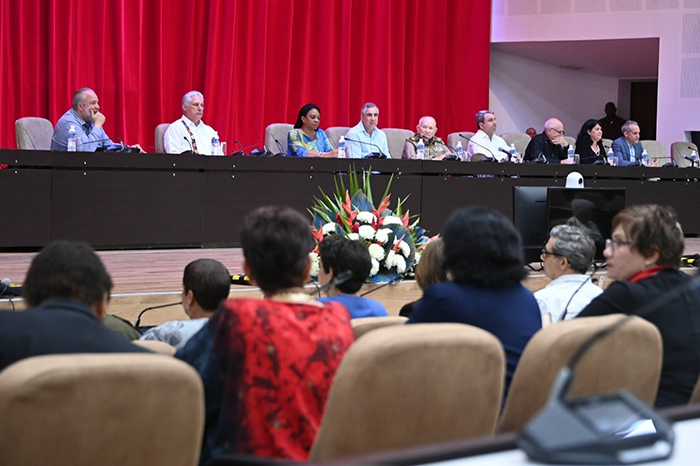
Before the plenary session of the CELAC Summit underway in
Santiago de Chile, Raul acknowledged that the region is
achieving its mission amidst difficult times.
The Cuban president urged the participants to give a strong
social dimension to CELAC, with an approach aimed at solving
the problems of poverty, illiteracy and drug addiction.
We are required to achieve significant progress in
education, as the basis for economic and social development,
he said.
Nothing that we are aiming at, from the reduction of
inequality to reducing the digital and technological would
be possible without it, he told the 32 Heads of State or
Government at the Espacio Riesco room.
He referred to the need to expand what he considered the
still insufficient support to Haiti, where he said there are
all kinds of material needs and whose government needs
resources for reconstruction and development.
He also called on the CELAC member countries to be able to
promote their own regional architecture, adapted to the
peculiarities and needs of Latin America and the Caribbean.
He referred to the scourge of drugs in the nations of the
region and estimated that "you can take steps" to address
it.
In the Chilean capital, the first CELAC summit (after
foundation) should culminate on Monday with the adoption of
a final declaration and the condemnation to the 50 year long
US economic, commercial and financial blockade against Cuba.
The declaration is also expected to support Argentina
statements about its sovereignty over the Malvinas (Falkland
Islands), among other issues affecting nations in the
region. |
|
|
|

|