|
International
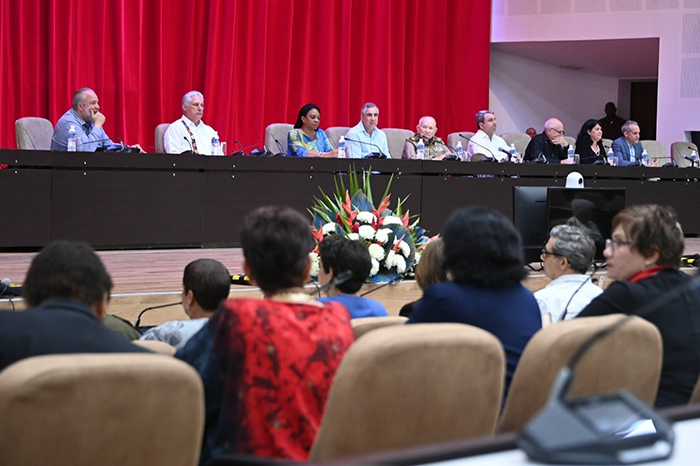
University Congress Kicks Off in Havana
HAVANA, Cuba, Feb 13 (acn)
Education Ministers, heads of multinational organizations
and personalities which include a Nobel Peace laureate will
participate in the “University 2012” 8th International
Congress of Higher Education that kicks off this Monday in
Havana city.
The role of higher education
institutions and their relevance to the pursuit of
sustainable development will center the debates of some 3000
delegates from over 50 countries at the Havana’s Convention
Center,
according to Prensa Latina news agency.
The delegates will discuss over 2 000 papers in this
Congress, whose first
edition was in 1998, and it is the largest of its kind in
Latin America
and one of the largest in the world, according to First
Deputy Minister of
Higher Education of Cuba, Rodolfo Alarcón Ortiz.
The main delegations are from Venezuela, Angola and Bolivia,
as well as
from South Africa, Congo, Guinea Bissau, Equatorial Guinea,
Zambia,
Zimbabwe, and Djibouti.
Chinese Qian Tang,Deputy Director General of Education of
the Organization
of the United Nations Educational, Scientific and Cultural
Organization
(UNESCO), is among the participants.
Among others are the Nobel Peace Prize in 1980, Argentine
Adolfo Perez
Esquivel, and the religious and social activist Brazilian
Frei Betto.
Cuban Higher Education Minister Miguel Diaz Canel will
deliver a
conference titled “University and sustainable development: A
view from
Cuba” this Monday.
Previously the delegates will participate in a special
workshop dedicated
to the Central University of Las Villas Marta Abreu, the
third founded in
Cuba that will turn 60 this December.
The program also includes 19 short courses offered by Cuban
specialists
that summarize the themes proposed by the sector to offer
them to foreign
visitors that wish to enrol in postgraduates studies such as
masters and
doctorates degrees.
It also stands out a panel chaired by the Cuban Minister of
Higher
Education and top experts from different countries, which
will set out the
vision of institutions and governments on the current
development and
perspective of the universities.
|