These are not dramatic
phrases. We must get used to the true facts. Hope is the last
thing human beings can relinquish. With truthful arguments, men
and women of all ages, especially young people, have waged an
exemplary battle at the Summit and taught the world a great
lesson.
It is important now that Cuba
and the world come to know as much as possible of what happened
in Copenhagen. The truth can be stronger than the influenced and
often misinformed minds of those holding in their hands the
destiny of the world.
If anything significant was
achieved in the Danish capital, it was that the media coverage
allowed the world public to watch the political chaos created
there and the humiliating treatment accorded to Heads of States
or Governments, ministers and thousands of representatives of
social movements and institutions that in hope and expectation
traveled to the Summit’s venue in Copenhagen. The brutal
repression of peaceful protesters by the police was a reminder
of the behavior of the Nazi assault troops that occupied
neighboring Denmark on April 1940.
But no one could have thought
that on December 18, 2009, the last day of the Summit, this
would be suspended by the Danish government –a NATO ally
associated with the carnage in Afghanistan-- to offer the
conference’s plenary hall to President
Obama for a meeting where only he and a selected group of
guests, 16 in all, would have the exclusive right to speak.
Obama’s
deceitful, demagogic and ambiguous remarks failed to involve a
binding commitment and ignored the Kyoto Framework Convention.
He then left the room shortly after listening to a few other
speakers. Among those invited to take the floor were the highest
industrialized nations, several emerging economies and some of
the poorest countries in the world. The leaders and
representatives of over 170 countries were only allowed to
listen.
At the end of the speeches of
the 16 chosen, Evo Morales, with the
authority of his indigenous Aymara
origin and his recent reelection with 65% of the vote as well as
the support of two-thirds of the Bolivian House and Senate,
requested the floor. The Danish president had no choice but to
yield to the insistence of the other delegations. When
Evo had concluded his wise and deep
observations, the Danish had to give the floor to Hugo Chavez.
Both speeches will be registered by history as examples of short
and timely remarks. Then, with their mission duly accomplished
they both left for their respective countries. But when
Obama disappeared, he had yet to
fulfill his task in the host country.
From the evening of the 17th
and the early morning hours of the 18th, the Prime
Minister of Denmark and senior representatives of the United
States had been meeting with the Chairman of the European
Commission and the leaders of 27 nations to introduce to them
--on behalf of Obama-- a draft
agreement in whose elaboration none of the other leaders of the
rest of the world had taken part. It was an antidemocratic and
practically clandestine initiative that disregarded the
thousands of representatives of social movements, scientific and
religious institutions and other participants in the Summit.
Through the night of the 18th
and until 3:00 a.m. of the 19th, when many
Heads of States had already departed, the representatives of the
countries waited for the resumption of the sessions and the
conclusion of the event. Throughout the 18th,
Obama held meetings and press
conferences, and the same did the European leaders. Then, they
left.
Something unexpected happened
then: at three in the morning of the 19th, the Prime
Minister of Denmark convened a meeting to conclude the Summit.
By then, the countries were represented by ministers, officials,
ambassadors and technical staff.
However, an amazing battle was
waged that morning by a group of representatives of Third World
countries challenging the attempt by Obama
and the wealthiest on the planet to introduce a document imposed
by the United States as one agreed by consensus in the Summit.
The representative of
Venezuela, Claudia Salerno, showed with impressive energy her
right hand bleeding from strongly slamming on the table to claim
her right to take the floor. Her tone of voice and the dignity
of her arguments will never be forgotten.
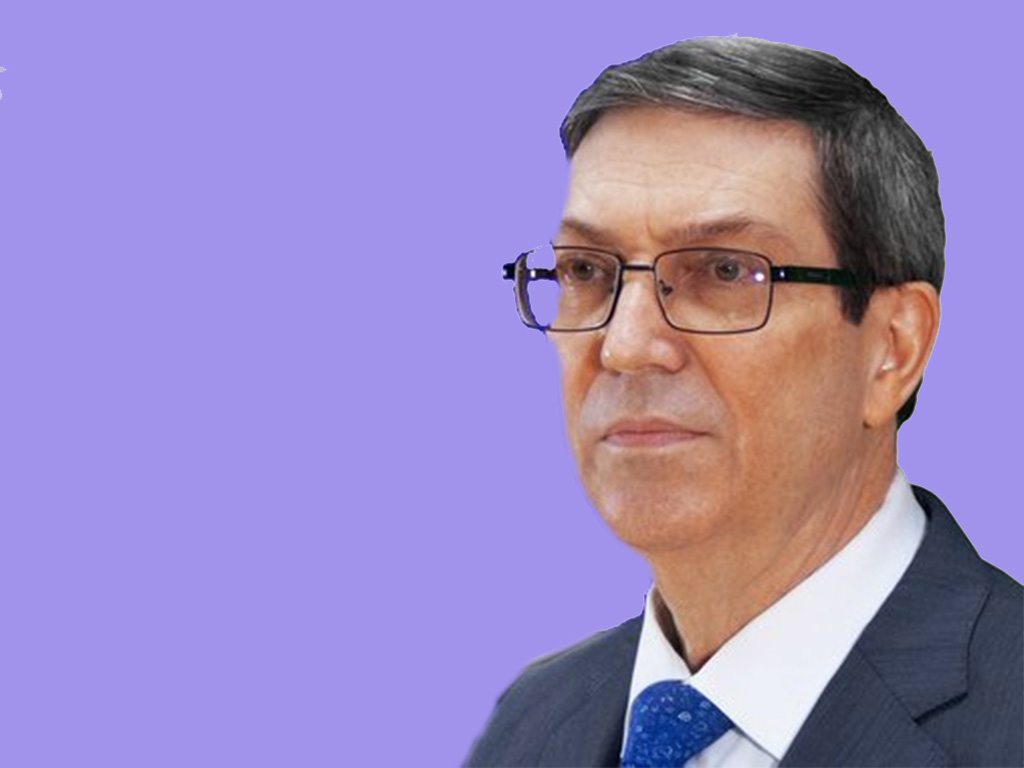
The Minister of Foreign
Affairs of Cuba made a vigorous speech of approximately one
thousand words from which I have chosen a few paragraphs to
include in this Reflection:
“The document that you, Mister
Chairman, repeatedly claimed that did not exist shows up now.
[…] we have seen drafts circulating surreptitiously and being
discussed in secret meetings…”
“…I deeply resent the way you
have led this conference.”
“…Cuba considers the text of
this apocryphal draft extremely inadequate and inadmissible. The
goal of 2 degrees centigrade is unacceptable and it would have
incalculable catastrophic consequences…”
“The document that you are
unfortunately introducing is not binding in any way with respect
to the reduction of the greenhouse effect gas emissions.”
“I am aware of the previous
drafts, which also through questionable and clandestine
procedures, were negotiated by small groups of people…”
“The document you are
introducing now fails to include the already meager and lacking
key phrases contained in that draft…”
“…as far as Cuba is concerned,
it is incompatible with the universally recognized scientific
view sustaining that it is urgent and inescapable to ensure the
reduction of at least 45% of the emissions by the year 2020, and
of no less than 80% or 90% by 2050.”
“Any argument on the
continuation of the negotiations to reach agreement in the
future to cut down emissions must inevitably include the concept
of the validity of the Kyoto Protocol […] Your paper, Mister
Chairman, is a death certificate of the Kyoto Protocol and my
delegation cannot accept it.”
“The Cuban delegation would
like to emphasize the preeminence of the principle of ‘common by
differentiated responsibilities,’ as the core of the future
process of negotiations. Your paper does not include a word on
that.”
“This draft declaration fails
to mention concrete financial commitments and the transfers of
technologies to developing countries, which are part of the
obligations contracted by the developed countries under the UN
Framework Convention on Climate Change […] Mister Chairman, by
imposing their interests through your document, the developed
nations are avoiding any concrete commitment.”
“…What you, Mister Chairman,
define as ‘a group of representative leaders’ is to me a gross
violation of the principle of sovereign equality consecrated in
the United Nations Charter…”
“Mr. Chairman, I formally
request that this statement be included in the final report of
the works of this regrettable and shameful 15th
session of the Conference of the Parties.”
The representatives of the
countries had been given only one hour to present their views.
This led to complicated, shameful and embarrassing situations.
Then, a lengthy debate ensued
where the delegations from the developed countries put a heavy
pressure on the rest to make the conference adopt the
abovementioned document as the final result of their
deliberations.
A small number of countries
firmly insisted on the grave omissions and ambiguities of the
document promoted by the United States, particularly the absence
of a commitment by the developed countries on the reduction of
carbon emissions and on the financing that would allow the South
countries to adopt alleviating and adjustment measures.
After a long and extremely
tense discussion, the position of the ALBA countries and Sudan,
as President of the G-77, prevailed that the document was
unacceptable to the conference thus it could not be adopted.
In view of the absence of
consensus, the Conference could only “take note” of the
existence of that document representing the position of a group
of about 25 countries.
After that decision was made,
--at 10:30 in the morning Denmark’s time-- Bruno, together with
other ALBA representatives, had a friendly discussion with the
UN Secretary to whom they expressed their willingness to
continue struggling alongside the United Nations to prevent the
terrible consequences of climate change. Their mission
completed, our Foreign Minister and Cuban
Vicepresident Esteban Lazo
departed to come back home and attend the National Assembly
session. A few members of the delegation and the ambassador
stayed in Copenhagen to take part in the final procedures.
This afternoon they reported
the following:
“…both, those who were
involved in the elaboration of the document, and those like the
President of the United States who anticipated its adoption by
the conference…as they could not disregard the decision to
simply ‘take note’ of the alleged ‘Copenhagen Agreement,’ they
tried to introduce a procedure allowing the other COP countries
that had not been a part of the shady deal to adhere to it, and
make it public, the intention being to pretend such an agreement
was legal, something that could precondition the results of the
negotiations that should carry on.”
“Such belated attempt was
again firmly opposed by Cuba, Venezuela and Bolivia. These
countries warned that a document which had not been adopted by
the Convention could not be considered legal and that there was
not a COP document; therefore, no regulations could be
established for its alleged adoption…”
“This is how the meeting in
Copenhagen is coming to an end, without the adoption of the
document surreptitiously worked out in the past few days under
the clear ideological guidance of the US Administration…”
Tomorrow our attention will be
focused on the National Assembly.
Lazo,
Bruno and the other members of the delegation will be arriving
at midnight today. On Monday, the Minister of Foreign Affairs
will be able to explain in details and with the necessary
accuracy the truth of what happened at the Summit.
Fidel Castro Ruz
December 19, 2009
8:17p.m.